
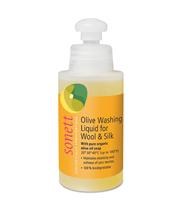
Olive Laundry Liquid for Wool and Silk
Package size: 120ml Vegan
Vegan
Ingredients
Ingredients
Product declaration
Soap from olive oil, certified organ. /
biodyn. cultivation 15–30%
Sugar surfactant 5–15%
Soap from rapeseed oil / sunflower oil,
certified organically grown 1–5%
Vegetable alcohol (ethanol) 1–5%
Citrate <1%
Essential lavender oil, certified organically grown <1%
Balsamic additives, certified organically grown /
collection from wild-growing plants <1%
Water, swirled up to 100%
List of ingredients as per EC 648/2004
Aqua, potassium soap*, alkylpolyglucoside C8–C16
(coco glucoside), alcohol, sodium/potassium citrate, parfum*, linalool*
*certified organically grown
Further information on INCI names ‣
Technical data
Density: 20 °C approx. 1.017 g / cm³
68 °F approx. 0.036 oz / in³
pH value: 20 °C, 5 g / litre H₂O
68 °F, 0.18 oz / 34 fl oz US H₂O
approx. 8.5–9.5
Contains lavender oil. May produce an allergic reaction.
At temperatures below 10 °C (50 °F), the product changes becoming slightly more solid and cloudy; a phase which will pass, however, once the product is exposed to warmth and by shaking it lightly, if necessary.
Origin and properties of the ingredients
Olive soap: It is from century-old olive groves of Mediterranean countries such as Italy, Spain and Greece that the fruit originates. It is used to obtain the olive oil – in certified organically grown quality – by mechanical processes such as pressing and centrifugation. When saponified with potassium hydroxide, it is the main constituent of Sonett’s Olive Laundry Liquid for Wool and Silk. Olive oil is the best oil raw material for making mild soap and restoring the deficient protective hydrolipidic film. Its well-balanced composition of fatty acids, its healing balancing effect on the cardiovascular system, and the remarkable growth of the olive tree in a 7-year cycle, demonstrate the special proximity and relationship of this oil to humans.
Rapeseed oil / sunflower oil soap: Vegetable oil, saponified with potassium hydroxide, serves to intensify the washing performance. In addition to flax and sunflower, rapeseed is one of the few oil-yielding plants which are cultivated for oil production in our temperate central European climate, and are also certified organically grown.
Ethanol: It is derived from fermentation of starch-containing plants such as maize and potatoes. Ethanol helps keeping the soap liquid, while at the same time improving the fat-dissolving property of the detergent.
Sugar surfactant: Sugar, starch and coconut oil are the raw materials for the sugar surfactant used. The proportion of sugar surfactant compared to the soap content of the detergent is such, that it serves for the calcium soap forming in case of hard water, to be kept finely dispersed and to prevent it from being deposited on the laundry.
Share:
Share on Facebook Share on Twitter Share on Pinterest Tell a friend